



Teen Patti is a beloved card game in India. It’s similar to poker but with its own flair.
Players receive three cards each, making it a fast-paced game. The excitement lies in the variations and strategies.
Understanding the ranking of hands is crucial. It helps players make informed decisions during the game.
Teen Patti variations add spice to the traditional game. They offer new challenges and keep players engaged.
From Muflis to AK47, each variation has unique rules. These variations can change the game’s dynamics entirely.
Diwali is a popular time for Teen Patti. Families and friends gather to enjoy these exciting variations.
Whether for fun or real stakes, Teen Patti is a game of skill and luck.
Teen Patti means ‘three cards’ in Hindi, which reflects its gameplay. It’s a card game with a rich history in India.
It shares similarities with British “Three Card Brag”. Both games involve betting and strategic thinking.
Teen Patti’s appeal lies in its simplicity. Anyone can learn the rules quickly and enjoy playing.
The game thrives in social gatherings and festive celebrations. Diwali is a prime occasion for its popularity.
Teen Patti has evolved beyond homes and gatherings. It’s now available online, reaching a global audience.
Key reasons for Teen Patti’s popularity include:
Players seek the thrill of luck intertwined with tactics. This blend makes Teen Patti a timeless favorite. Its cultural significance and adaptability have helped it endure through generations.
Understanding Teen Patti rules enhances the gaming experience. Each player receives three cards. The game’s objective is to have the best hand or bluff your way to victory.
Players start with an ante, a mandatory bet. It builds the initial pot before cards are dealt.
After cards are dealt, players bet in a clockwise direction. They can choose to bet blind or see their cards first.
In blind play, players rely on intuition, adding unpredictability. Seen players have more information, influencing their betting decisions.
Player options include:
Betting continues until all but one player folds or calls. The best hand, if multiple remain, claims the pot.
Teen Patti ends in a showdown if more than one player stands. Players reveal their hands, determining the winner based on hand rankings.
The excitement lies in its balance of skill and chance. A player’s psychology and strategy can swing the game’s outcome. Success hinges not solely on card value but also on the player’s ability to read opponents and manage risks.
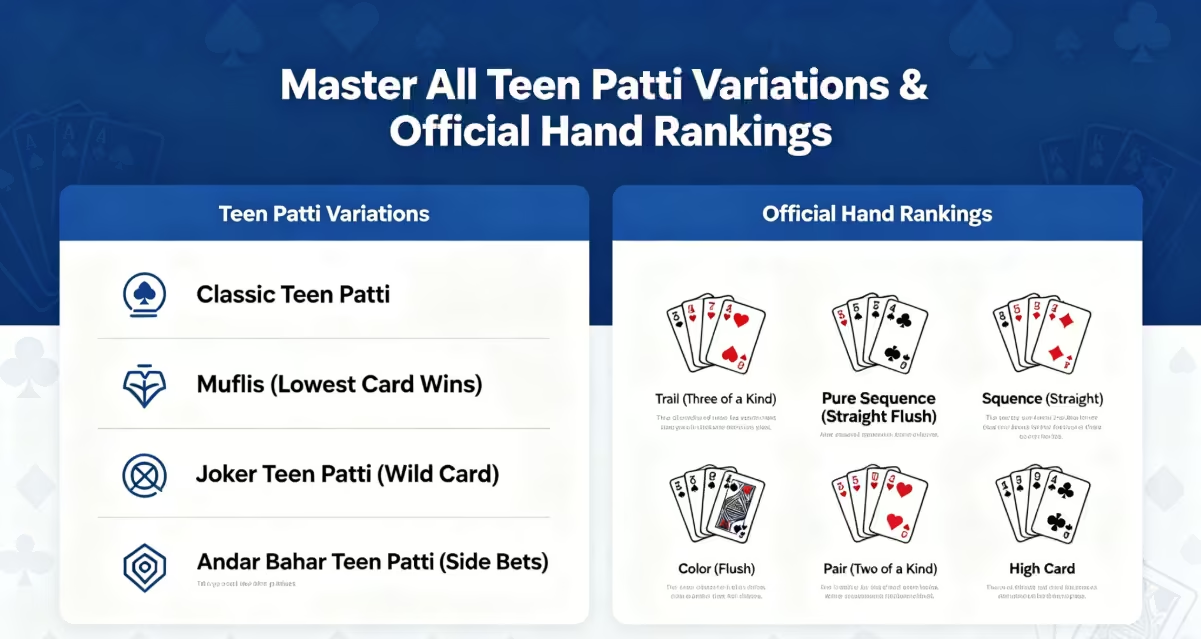
Understanding hand rankings is crucial in Teen Patti. These rankings determine your strategy and success.
A “Trail” or “Trio” is the best hand. It consists of three cards of the same rank. Winning with a trail is impressive.
Next is the “Straight Flush”. This hand features three consecutive cards of the same suit, offering a strong chance of winning.
A “Pure Sequence” is valued lower than a straight flush. It involves three consecutive cards of different suits.
Following these, we have the “Color” hand. It contains any three cards from the same suit, not in sequence.
The “Pair” hand includes two cards of the same rank. The higher the pair, the better its ranking.
A “High Card” is the lowest ranking. It consists of any three cards that form none of the above combinations.
Here’s a quick list:
Knowing these rankings ensures better decisions during gameplay. You can strategize bets and bluffs more effectively.
Possessing a superior hand boosts your odds, but many enjoy the thrill of bluffing. This balance of luck and wit makes Teen Patti intriguing.
Exploring Teen Patti variations adds layers of excitement to the game. Players get to experience fresh challenges with each new variant.
Playing different versions sharpens your strategic skills. It broadens understanding, making you adaptable in different scenarios.
Learning variations can transform routine sessions into thrilling adventures. They’re perfect for breaking the monotony.
Key benefits include:
Festivals like Diwali are ideal for trying Teen Patti variations. They add flair and fun to celebrations, making gatherings memorable.
Diving into classic Teen Patti variations can enhance your gameplay. Each variation introduces a unique twist, making the game more engaging.
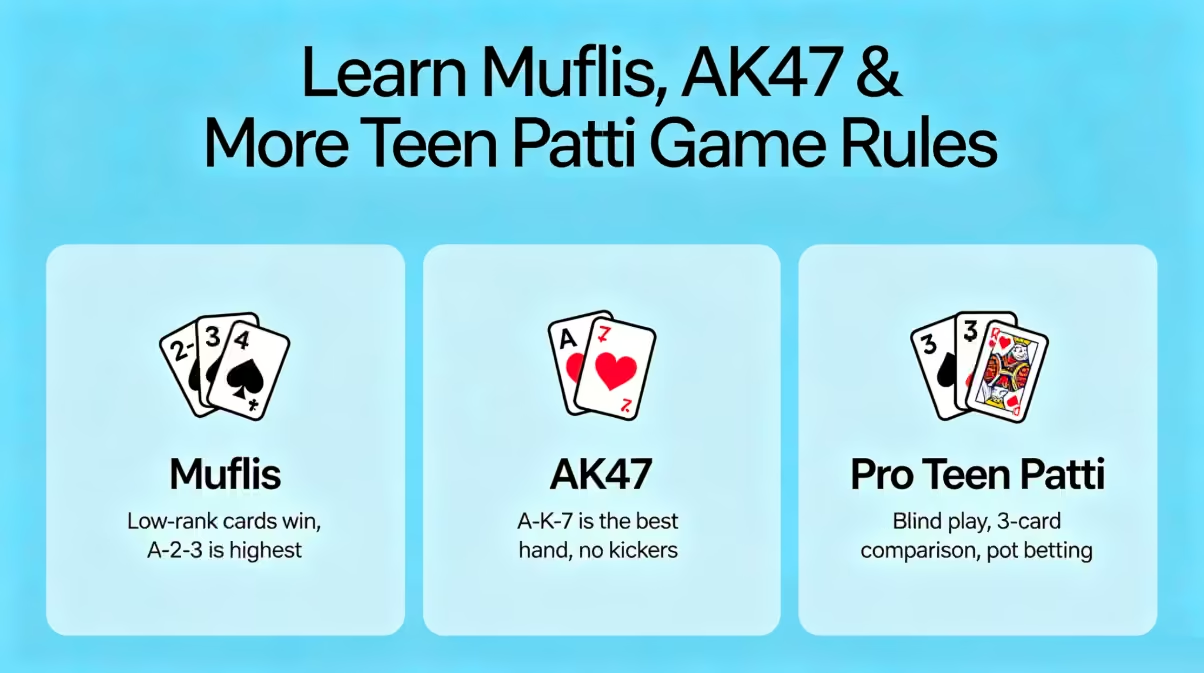
Let’s start with Muflis. In this variation, the traditional hand rankings are reversed. This means the lowest hand wins, offering a new strategic challenge.
Next, we have AK47. In AK47, certain cards become jokers. Specifically, Aces, Kings, 4s, and 7s can represent any other card in a hand. This adds a layer of unpredictability.
The Joker Variation is another popular choice. Here, wild cards can substitute for any card, creating potential for powerful hands.
Then there’s the Best of Four. Players receive four cards and must choose their best three. It allows for more strategic decision-making.
These variations are perfect for adding excitement to your Teen Patti sessions. They challenge players to think differently about strategy and hand rankings.
To summarize, here are some key classic variations:
Trying these variations can make traditional gameplay feel novel and exciting. They test your adaptability and strategy in new ways. Mastering them enhances your overall Teen Patti expertise.
Muflis flips traditional hand rankings. Here, the weakest hand takes the pot. This reversal alters the approach to gameplay significantly.
In standard Teen Patti, higher-ranked cards and combinations win. However, Muflis rewards players for having low-value cards.
Understanding this variation involves adopting a different strategy. Bluffing can become more effective since opponents aim for lower hands.
Being skilled in Muflis broadens your strategic arsenal. It challenges conventional thinking and provides diversity in your Teen Patti experience.
AK47 is a favorite among players for its use of jokers. Aces, Kings, 4s, and 7s become wild, adding unpredictability.
This variation demands clever thinking. Knowing all these cards act as jokers allows for various combinations.
Mastering AK47 requires adaptability. It tests your ability to envision multiple hand possibilities and play strategically.
The Joker Variation introduces wildcards into the mix. Any chosen card can become a joker for the round.
This makes forming high-value hands easier. The potential for creativity and surprise gives the game a dynamic twist.
Players can use this variation to test their tactical skills. You must think quickly about possible hand combinations during each game.
The Best of Four variation offers players four cards instead of three. They must decide the three-card combination providing the strongest hand.
This twist increases strategic depth, as one must eliminate a card. Players need to evaluate potential hands carefully.
Best of Four enhances decision-making skills. It makes players weigh their options and plan moves with precision.
For those who crave excitement, exploring crazy Teen Patti variations is a must. These variations inject unpredictability and thrill into every round.
Players can expect the unexpected with creative rules and challenges. From wild cards to unique hand requirements, there’s something for everyone.
These variations can transform a standard Teen Patti session into a memorable adventure. They encourage innovative thinking and spontaneous gameplay.
Here are some notable examples of crazy Teen Patti variations:
by Hartono Creative Studio (https://unsplash.com/@hartonocreativestudio)
These variations keep players on their toes, continuously adapting and strategizing. Each adds a unique layer to the standard rules, testing skills and luck in equal measure.
In Auction, players must bid for the privilege of taking the best hand. Bidding wars can become intense, with high stakes attached. The thrill lies in acquiring a dominant hand through smart bidding.
Players need to assess hand potential before making bids. It’s a gamble that combines financial tactics with card strategy, making it highly entertaining.
In King Little, the role of the King card is entirely reversed. Instead of holding a strong position, it becomes the lowest rank. This twist shifts the typical gameplay dynamics significantly.
Strategizing without the power of Kings turns traditional approaches upside down. This variation requires players to adapt their usual card-ranking strategies quickly.
Every move in King Little hinges on awareness. Players must consider both card ranks and how the King’s new role impacts the game.
In Joker Hunt, wildcards are hidden within the deck, waiting to be discovered. Players must keenly observe and hunt for these hidden jokers during gameplay.
This variation challenges players to think ahead and be vigilant. Using observation and deduction is crucial in locating and using jokers effectively.
Excitement builds as players strive to uncover these potent jokers. It’s a race to see who can master the art of the Joker Hunt.
Rotating Jokers introduces an ever-changing joker card element. What is initially a joker might switch to another during the game.
This dynamic twist constantly alters strategy, requiring rapid adaptation. Players must remain flexible and adjust to joker shifts during gameplay.
Winning in Rotating Jokers means staying mentally agile. It’s a game of both chance and adaptability, rewarding those quick to adjust.
Closest to 555 dares players to form a hand with a total value nearest to 555. Achieving this requires calculating skills and precision.
The game demands careful selection and arrangement of cards. Players must weigh their choices carefully to reach this specific sum.
This variation challenges mathematical skills. It’s a precise, calculated pursuit, making every decision matter immensely.
Odd Sequence turns the quest for a pattern into a requirement for success. Achieving an odd-numbered sequence of cards is the goal.
It flips usual expectations, encouraging players to pursue an unusual card arrangement. It’s a short burst of unique fun and creativity.
In 999, the magic number three holds sway. Forming hands totalling a numerical sum near 999 is the target.
This variation elevates the need for mathematical skill. Calculated risks and precise planning transform ordinary rounds into brain-tickling challenges.
Balancing strategy with luck leads players to success. The goal is clear-cut but never easy, requiring clever execution.
Stud adds surprise by revealing new cards during play. This shakes up the norm, prompting new strategies on the fly.
Players deal with uncertainties brought by these revelations. Quick thinking is essential as Stud reshapes plans in real-time.
Adaptation becomes key as the game unfolds unpredictably. This format blends spontaneity with strategic ingenuity beautifully.
With Discard One, players draw multiple cards but must choose wisely to cast one aside. This selection process demands strategic foresight.
Discarding correctly transforms a hand, potentially leading to triumph. Picking the right card to discard is a tactical decision crucial for victory.
This simple act brings depth, testing players’ ability to judge card utility. Each decision can alter the game’s course dramatically.
In 2 Cards Open, players’ hands are partially revealed, showing two cards. This variation alters the approach to bluffing and strategy.
Other players get a sneak peek of potential hands. This transparency demands reassessment of typical strategies.
Decisions pivot on the known, visible elements. Whether to bluff or play openly changes based on shared information dynamics.
Wild Draw randomizes outcomes through the surprise of unexpected cards. Every new card holds potential for the unexpected.
Quick adaptation and instant strategies become paramount. Wild Draw tests players’ ability to navigate unpredictability with composure and skill.
In Out Teen Patti gives players a choice before every round. They can decide whether to play on or sit out.
Participation depends on each player’s hand confidence. This element introduces strategic deliberation before committing to each round.
The challenge is in evaluating hand strength and game conditions. Opting in or out hinges on assessing odds and opportunities thoroughly.
Diwali is a time for lights, joy, and Teen Patti. This festival is synonymous with gathering around the table to play.
Teen Patti becomes more vibrant with special Diwali variations. Families and friends use these to enhance the festive spirit.
During Diwali, specific variations bring extra excitement. These are steeped in cultural significance, bonding communities over cards.
Popular Diwali Teen Patti variations include:
Each variation adds a unique dimension to gameplay. They create joyous, memorable experiences during this celebratory time.
Playing Teen Patti at Diwali mixes tradition and thrill. It’s a chance to enjoy the company of loved ones with a beloved game.
Teen Patti is not just about luck; strategy plays a key role. Understanding each variation can significantly improve your chances of winning.
Each Teen Patti variation demands a tailored approach. Knowing the specific rules helps in crafting effective strategies.
Some general strategies for success include:
Expert players often adjust their strategies on the fly. They remain unpredictable to catch opponents off guard.
It’s also crucial to know when to fold. Avoid holding onto weak hands hoping for a miracle.

by Simon Kessler (https://unsplash.com/@shoodream)
A sound strategy allows players to navigate the unpredictability of Teen Patti. Mastery comes with practice and learning from each play.
Teen Patti can be deceptively simple. However, errors are common among players of all levels. Avoiding these mistakes can enhance your play significantly.
One major mistake is underestimating opponents. Always respect your competitors’ skills and strategies. Predictability can be another trap; stay flexible and unreadable.
Common mistakes players often make include:
Another error is neglecting to manage your bets. Careless betting can deplete your bankroll rapidly, harming your game. Consistent focus and awareness are keys to a successful Teen Patti play.
The digital realm has revolutionized Teen Patti, making it accessible and exciting. Online platforms host multiple variations of this beloved card game. Players can enjoy anytime, anywhere.
Digital Teen Patti offers various benefits. These include playing against global opponents and accessing numerous variations. It allows new players to learn at their own pace without the pressure of traditional settings.
Key online trends include:

by Daan Geurts (https://unsplash.com/@daan_geurts)
Tech advancements ensure online play keeps evolving. Robust security and enhanced user interfaces contribute to a seamless experience. Teen Patti continues to thrive in this digital age.
What are the basic rules of Teen Patti? Teen Patti is similar to poker, focusing on three-card hands. Players aim to have the best hand by betting and strategizing. Understanding the hand rankings is essential.
How do hand rankings work in Teen Patti? The strongest hand is a Trail (three of a kind). Following that, there are runs, flushes, pairs, and the lowest, a high card. Each hand holds unique strategic value.
Can variations of Teen Patti alter hand rankings? Yes, certain variations modify traditional rules. For instance, Muflis reverses rankings, making a high card desirable.
Where can I learn more about Teen Patti variations? Platforms and communities online offer detailed guides. They provide insights into strategies for these exciting variations.
Mastering Teen Patti involves understanding both variations and hand rankings. Each variation introduces different dynamics. These changes keep the game fresh and exciting for players.
Exploring these variations enhances strategic thinking. It challenges players to adapt and develop unique approaches. The game’s depth grows with each new version learned.
Whether for social gatherings or festivals like Diwali, Teen Patti remains a favorite. Its blend of strategy, skill, and luck captivates players. Dive into Teen Patti and discover this engaging card game.