


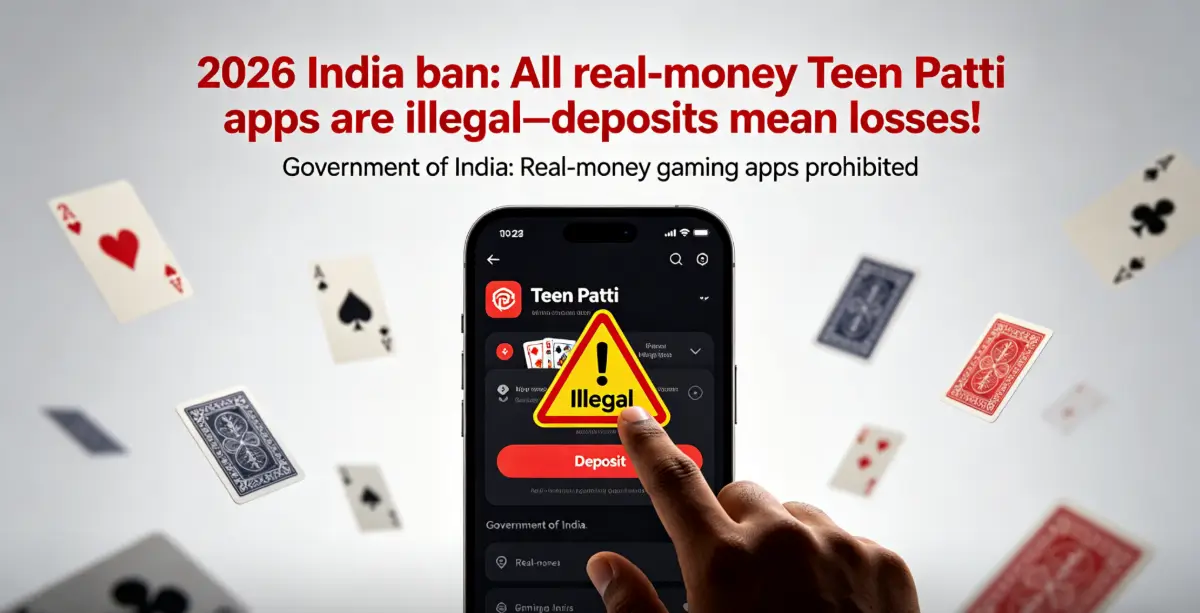
You’ve probably seen the ads. They’re everywhere Instagram stories, YouTube pre-rolls, WhatsApp forwards from friends who swear they’ve “already withdrawn.” The message is always the same: download this Teen Patti real money app, play a few hands, and watch the cash roll in. No experience needed. No investment required. Just download, play, and earn.
And honestly? It sounds amazing. A game you’ve been playing at Diwali parties since you were a kid, now somehow paying you real money to play it on your phone. What could possibly go wrong?
A lot, it turns out.
I’m not here to tell you Teen Patti is a bad game. It’s not. It’s one of the most beloved card games in Indian culture for good reason the strategy, the bluffing, the moment when you flip those three cards and everything hangs in the balance. That’s real. What I am here to tell you is that the “real money app” ecosystem built around it is a minefield, and if you don’t know exactly where the mines are buried, you’re going to step on one.
The platform at the center of this article is teenpattipro.com.in a site that presents itself as “the ultimate destination for all Teen Patti enthusiasts” and promises “real cash rewards” for playing. It’s one of countless similar platforms operating across India right now. And honestly, picking on just one feels almost unfair, because the problems I’m about to describe apply to dozens, maybe hundreds, of nearly identical apps.
But someone needs to say it plainly. So here we go.
Let’s get the terminology straight before we go any further.
A “Teen Patti real money app” is exactly what it sounds like: a mobile application where you play Teen Patti the traditional Indian three-card game and wager actual rupees on the outcome. You deposit money through UPI, Paytm, or bank transfer. You play against other users (or so you’re told). If you win, your balance goes up. If you lose, it goes down. And ideally, when you’ve built up enough winnings, you hit “withdraw” and the money shows up in your bank account.
That’s the pitch, anyway.
In reality, the line between a legitimate skill-based gaming platform and an outright scam has become almost invisible in this space. Some apps operate as genuine peer-to-peer card rooms. Many more operate as something else entirely: sophisticated funnels designed to extract deposits while making withdrawals as difficult or impossible as the platform can legally (and sometimes illegally) get away with.
The key thing to understand is this: when you play Teen Patti for real money, you are gambling. Not “gaming.” Not “earning.” Gambling. The outcome depends partly on skill reading opponents, calculating odds, deciding when to fold but also substantially on chance. Which cards land in your hand. What the other players hold. Whether the algorithm dealing those cards is actually fair.
That last part is important, and we’ll come back to it.
Teen Patti Pro, the specific app promoted through teenpattipro.com.in, advertises itself as a premium destination with multiple game modes (Classic, Joker, Muflis, AK47), global multiplayer, multi-language support, and the hook that matters “real cash rewards.” The site encourages you to download the APK, register, and start playing. The messaging is warm. The graphics are polished. Everything about the experience feels legitimate.
But as anyone who’s spent time in this space will tell you: the real test of a platform isn’t how it looks. It’s what happens when you press “withdraw.”
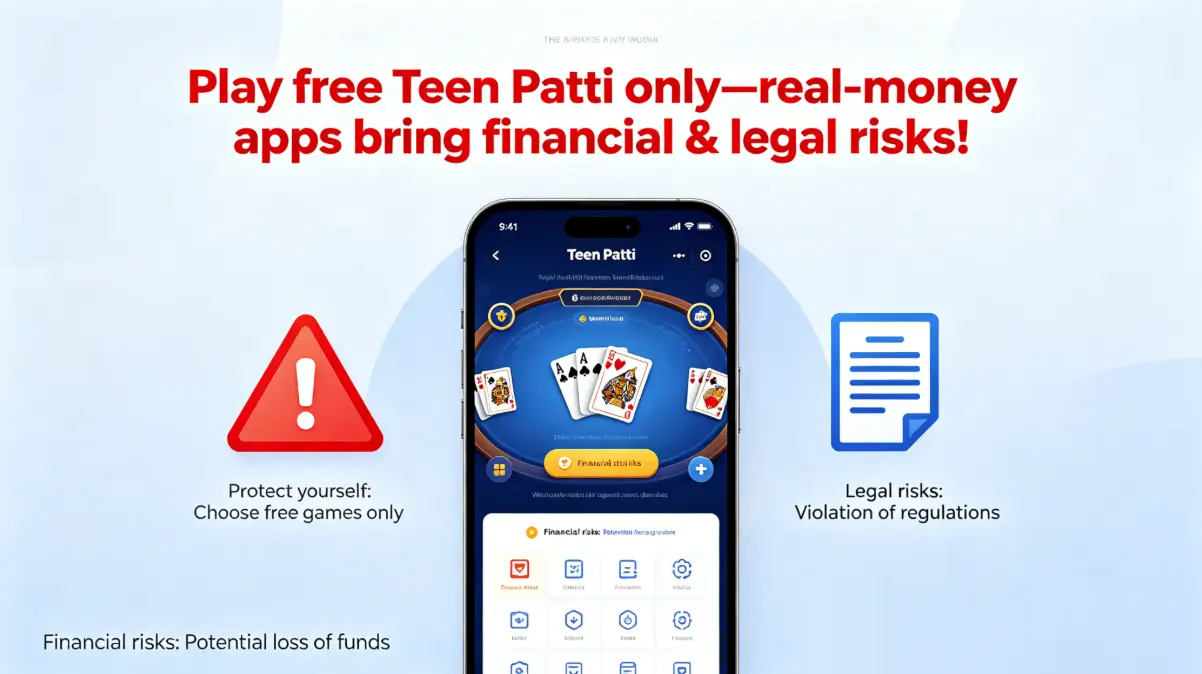
If you want to understand what’s really going on with Teen Patti real money apps, don’t read their marketing pages. Read the complaints.
The Consumer Complaints Court database a public repository where Indian consumers file grievances against companies contains a trail of complaints about Teen Patti Pro going back to at least 2020. One user reported losing over ₹1 lakh on the app: “I played teen patti pro application… I played ander baher bet playing 100/50 I win. Every time but some time I using more then 500 hundred 1000 I lose last one 6 month ago I lose more then 1 lakh rs and suddenly app not working more.”
Notice that pattern: small bets won, large bets lost. Then the app stops working entirely.
Another complaint describes the experience of watching a game result change in real time: “It was 1600rs game and I selected under 7 on the dice but it came exactly 7 but after 1 seconds I saw on the top of the screen that previos game dice result was 3 and in last 8-10 games it was never 7 so I want to know how I lost the game.” The user watched the result change on screen. Whether this was a display glitch or something more deliberate, it doesn’t inspire confidence in the platform’s fairness.
And then there’s the withdrawal issue the complaint that shows up more often than any other: “My withdrawal is not show in my account,” filed back in September 2020, unresolved.
These complaints span years 2020, 2021, 2023, 2026. Same app. Same problems. Same silence from the platform.
So how does the trap actually work? It’s more sophisticated than a simple “take the money and run.” These platforms are designed to extract deposits in stages, pulling you deeper while making you believe a payout is just around the corner.
First, you discover the app maybe through a “best earning app” search, maybe through a friend’s referral link, maybe through a WhatsApp forward promising “easy money.” You download it. It’s free. You’re already past the first gate.
Second, you receive a welcome bonus usually ₹41 to ₹120 and you start playing. The bonus feels like free money. Psychologically, you’re playing with the house’s chips now, not your own. You take risks you wouldn’t normally consider. And here’s where it gets interesting: many, many users report winning at this stage. The cards seem favorable. Your ₹100 becomes ₹300, then ₹500. Confidence builds.
Third, you try to withdraw. And this is where the machinery activates. The platform may tell you that your bonus balance isn’t withdrawable only “earnings from gaming” count. Your ₹500 visible balance? Maybe ₹300 of that is locked bonus funds. Your real withdrawable amount is ₹200. But the minimum withdrawal is ₹100 you’re above it, barely. So you submit the request, feeling relieved.
Fourth, the barriers appear. You might need to complete KYC verification first submitting your PAN card, Aadhaar card, bank details. On legitimate platforms, KYC is a regulatory requirement processed within hours. On these platforms, users report that verification stays “under review” indefinitely. You might be told you need to meet a “wagering requirement” meaning you must bet a multiple of your deposit amount before withdrawals unlock. You might be asked to reach a certain VIP level. Or you might simply be told the withdrawal is “processing” 24 hours becomes 48, becomes a week, becomes two months.
A particularly revealing complaint filed on March 26, 2026, captures the frustration perfectly: “Teen patti dhan is totally fraud it can deposit money so easily but when you try to withdraw it’s takes 24 hrs of processing after that still not given to your bank account I am waiting for 2 months my 500 500 two withdrawal not received.”
Two ₹500 withdrawals. Two months. Zero money.
Even users who manage small initial withdrawals often find that as their winnings grow, so do the obstacles. A complaint about Namaste Teen Patti is typical: “It appears that the app is engaging in fraudulent practices by taking deposits but blocking withdrawals for users.” And the pattern on platforms like Teen Patti Club is identical: “And I win 21692.then i withdrawal my all money from game . The. It takes 5 day but my money can’t withdraw is still showing in processing. Then i msg to customer support to hlp .but they don’t give reply to me for 5 days.”
Meanwhile, the “reverse withdrawal” button present on many of these apps offers to cancel your pending request and return the money to your gaming balance. Why would anyone click that? Because waiting is frustrating. Because you’re watching other players win. Because the platform whispers: just a few more hands and you’ll break through. And when you cancel the withdrawal and lose the balance gambling? The platform wins without ever having to deny you.
If you think this only affects small players who lose a few hundred or thousand rupees, you need to hear about the bigger cases. These are not isolated incidents. They are part of a pattern that law enforcement across India is actively investigating and arresting people for.
A 36-year-old businessman from Hyderabad received WhatsApp messages in 2025 from unknown numbers promoting an online betting platform called “BETINEXCHANGE.” The callers, posing as platform representatives, encouraged him to participate in online betting on cricket, Teen Patti, and casino games, promising “high and guaranteed profits.”
To test the platform, he deposited ₹20,001. He received ₹5,000 as profit a return designed to build trust. Between 2025 and January 2026, he went on to deposit approximately ₹1.5 crore across multiple transactions from his personal bank accounts and even his wife’s accounts.
Though he initially received about ₹20 lakh back, he subsequently suffered massive losses and eventually lost the entire deposited amount. Whenever he attempted to withdraw his winnings or recover losses, the operators redirected him to other interconnected sub-platforms, which frequently changed domain names and bank accounts to evade detection. “The accused created an illusion of profit in the beginning to gain his confidence and later manipulated betting results and blocked withdrawals.”
In March 2026, Hyderabad Cyber Crime police arrested four individuals in connection with the fraud: Mohammed Syeeduddin (26), Mohd Tajuddin (31), Mohd Younis (25), and Mohd Ayub (24). One of the accused had previously worked at a call center in Dubai, revealing the international scope of these operations.
The complaint lists “hundreds of transactions” across Union Bank of India and HDFC Bank accounts ₹9,000 to ₹40,000 at a time gradually draining the victim’s entire financial reserves. Not in one dramatic moment. In thousands of small, calculated extractions.
In a separate case from March 2026, Navi Mumbai Cyber Police busted a sophisticated online gaming fraud syndicate that had duped a 30-year-old contractor from Koparkhairane of ₹65.16 lakh over three years.
The victim was drawn to a fraudulent platform called “SAT Sports,” which “projected itself as a legitimate listed gaming company.” After registering in 2023, he was encouraged to invest in Teen Patti and casino games. Initially, the fraudsters credited small returns to gain his confidence. Over three years, his virtual dashboard displayed profits of ₹1.25 crore. But when he attempted to withdraw the funds, his account was blocked, exposing the entire scheme.
The arrests were significant. Two men were taken into custody: Vishal Ramratan Jaiswal (26), an Assistant Security Manager at HDFC Bank, and Avesh Dharmendra Varman (26). During raids, police seized 86 bank account kits, 64 ATM cards, multiple SIM cards, and a POS machine the infrastructure of a professional fraud operation.
The investigation revealed that activated Indian SIM cards were being couriered to Dubai-based handlers who operated the scams and withdrew funds, complicating tracking efforts significantly. As the investigating officer noted: “We are investigating the involvement of other bank officials and the exact trail of the money sent abroad.”
These victims weren’t naive. They weren’t uneducated. They were businessmen who understood risk and reward. They tested the platforms with small amounts first. They saw returns. The trap was sophisticated enough to fool people who, in any other context, would consider themselves careful with money.
Here’s the thing about the Teen Patti real money app ecosystem: for years, it operated in a legal grey zone so murky that even regulators couldn’t agree on where the lines were. Platforms claimed they were “skill-based games” protected by Supreme Court judgments that distinguished games of skill (like rummy) from games of chance (like roulette). State governments passed their own laws. Courts kept intervening. Nobody had a clear answer.
That era ended decisively in 2025.
In August 2025, the Indian Parliament passed the Promotion and Regulation of Online Gaming (PROG) Act, a landmark piece of legislation that fundamentally restructured how online games are classified and regulated. The Act didn’t just tighten existing rules it created an entirely new framework, dividing online games into three distinct categories:
Online Money Games any game where users deposit money and play with the expectation of winning money are banned outright, regardless of whether the game involves skill or chance. This is as clear as it gets. It doesn’t matter that Teen Patti involves strategy. It doesn’t matter that the platform calls itself a “skill game.” If users deposit money and expect to win money, the platform is prohibited. Period.
E-sports competitive skill-based titles like Valorant and BGMI are recognized and promoted as legitimate sporting activities, but with strict prohibitions on any betting or wagering. No exceptions.
Online Social Games purely recreational games that can charge subscription fees or run ads, but must not involve real-money wagering. These continue operating, and for players who just want to enjoy Teen Patti without financial risk, this category is the safest destination.
On April 22, 2026, the Ministry of Electronics and Information Technology (MeitY) notified the detailed implementing rules, which took effect on May 1, 2026 just days ago from when I’m writing this. These rules created the Online Gaming Authority of India (OGAI) , a digital-first regulatory body with significant enforcement powers, including the ability to direct banks and payment systems to block transactions linked to prohibited money games.
As S. Krishnan, Secretary of MeitY, stated plainly: “The banks and the financial institutions… under the Act, there are provisions which say that anybody who participates in promoting this activity or providing financial transactions for such activity will also be guilty of an offence under the original Act.”
What does this mean for you? Practically, it means that as of May 1, your bank is legally obligated to block transactions with unregistered money gaming platforms. If you deposit funds, you’re relying on an illegal payment channel. If your withdrawal gets stuck, you have almost no legal recourse, because the underlying activity is itself prohibited.
Penalties under the Act are severe: individuals involved in operating or promoting online money games can face imprisonment of up to 3 years and fines up to ₹1 crore. Even advertisers including the influencers who promote these platforms can be held liable. The government has already blocked over 8,400 betting and gambling platforms as of March 2026.
The dream of “earning” through a Teen Patti real money app has not just been morally questioned. It’s been legally dismantled.
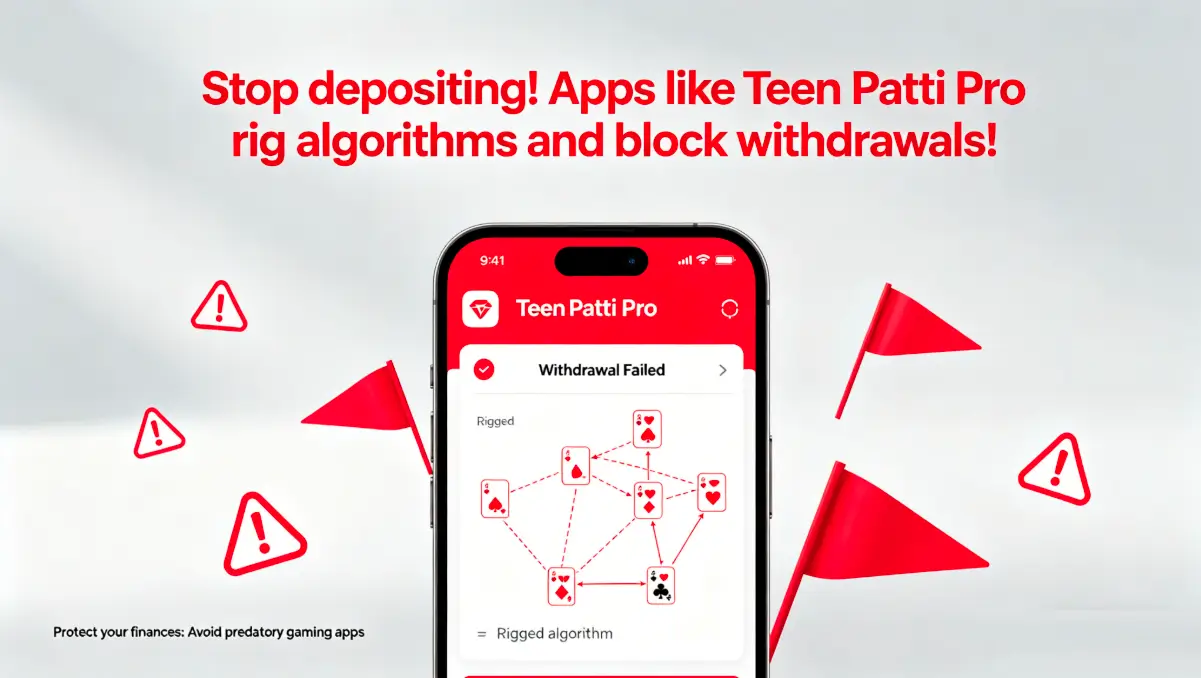
If you’ve ever Googled “best Teen Patti real money app” and let’s be honest, who hasn’t, at least once, after seeing those ads you’ll have noticed something strange. The results are a mess. Hundreds of nearly identical listicles. Apps with names that blur together: Teen Patti Gold, Teen Patti Pro, Teen Patti Master, Teen Patti Dhan, Namaste Teen Patti, Turbo Teen Patti. The names keep changing, but the problems stay the same.
This is not a coincidence. It’s a deliberate tactic called “brand sprawl.” Operators release multiple apps under slightly different names to maximize search visibility, escape bad reviews that accumulate under any single brand, and evade regulatory attention. When one app gets flagged or shut down, the operator simply pivots to another.
The sheer number of complaints tells its own story. Search “Teen Patti Master” on consumer complaint forums and you’ll find hundreds of entries about everything from charges for deposits that never arrived to withdrawals that disappeared into processing limbo: “I recharge on teen patti master but I didn’t receive it… Ayush from JS Team saying no refund policy.”
The Teen Patti Pro platform, specifically, carries a 1.7 out of 5 rating on Trustpilot, categorized as “Bad.” The reviews tell a consistent story: smooth deposits, impossible withdrawals, unreachable support. This is not a marginal opinion. This is the consensus of hundreds of users who trusted the platform with their money.
Why don’t genuine, trustworthy Teen Patti apps need to constantly rebrand? Because they retain users. Because word-of-mouth is positive. Because when someone withdraws ₹500, it actually arrives. If you see an app that’s on its fifth or sixth name in two years, ask yourself: what are they running from?
Let’s talk about something that most coverage of Teen Patti real money apps glosses over: the algorithm.
When you play Teen Patti on a regulated, audited platform in a jurisdiction with strong consumer protections, the card distribution is required by law to be genuinely random. Independent testing labs verify the randomness. The platform has no incentive to manipulate individual hands because its profit comes from the rake a small percentage taken from each pot not from whether any particular player wins or loses.
When you play on an unregulated app promoted through a site like teenpattipro.com.in, none of those protections exist. You are trusting the platform to deal fairly. And the platform has every incentive to deal unfairly.
Multiple users have reported suspicious patterns that strongly suggest algorithmic manipulation. “When I bet smaller umi won but when I bet 2000+ every time I loss my money,” reported one user who lost ₹13.6 lakh. Small bets wins. Large bets losses. This is not random variance. This is the algorithm extracting maximum deposits while maintaining the illusion of a fair game.
Another user reported watching their dice game result change on screen: “I selected under 7 on the dice but it came exactly 7 but after 1 seconds I saw on the top of the screen that previos game dice result was 3.” Whether this reflects deliberate manipulation or a “glitch” that selectively appears during money games is almost beside the point. On an unregulated platform, the user has no way to verify fairness and no meaningful recourse when things go wrong.
Zerodha founder Nithin Kamath recently raised the alarm about offshore betting apps that are “mushrooming” after the real money gaming ban, noting that these platforms lure users with low entry costs (as little as ₹300) and then route funds offshore through shell companies and UPI accounts, rendering recovery nearly impossible. The ecosystem is predatory, and it’s designed to be untraceable.
Here’s what makes me genuinely sad about all of this.
Teen Patti is not the villain in this story. Teen Patti is a beautiful game. It’s been played in Indian homes for generations, long before smartphones existed, long before anyone thought to attach a UPI ID to a card table. It’s a game of nerve and intuition, of reading faces and controlling your own tells. It brings families together during Diwali. It turns strangers into friends. It creates the kind of moments a perfectly timed blind bet, an audacious bluff that pays off, the collective groan when someone reveals a trail that you remember for years.
The problem isn’t the game. The problem is what’s been done to it.
When you strip the money out, Teen Patti is still Teen Patti. The strategy still matters. The bluffing still feels electric. The social connection still works. In fact, many players find that when they switch to free-to-play platforms, they actually enjoy the game more because the anxiety of real-money losses is gone. You play for points, for ranking, for the satisfaction of outsmarting your opponents not for the desperate hope that this time, the withdrawal might actually go through.
The Teen Patti Pro listing on the Apple App Store explicitly states: “This game is intended for an adult audience and does not offer real money gambling or an opportunity to win real money or prizes.” That’s the version you want. Download that. Play that. Enjoy that. The cards deal the same. The strategy works the same. The only thing missing is the withdrawal anxiety and honestly, good riddance.
A: After the PROG Act took effect on May 1, 2026, any platform that accepts deposits and offers cash payouts is classified as a prohibited online money game regardless of whether it involves skill or chance. Before the ban, some users did report receiving small withdrawals from certain platforms, but the pattern across thousands of consumer complaints strongly suggests that withdrawal success became increasingly unlikely as amounts grew. Under current law, operating such a platform within India is illegal. If you encounter one still advertising real-money play, it’s either operating in violation of the law or routing funds through offshore entities and in either case, your money is at risk.
A: The minimum withdrawal on Teen Patti Pro is ₹100, but only “money earned through gaming” is withdrawable bonus amounts are locked and can only be used for further gameplay. So if your balance shows ₹500 but ₹300 of that is bonus funds, only ₹200 is actually eligible for withdrawal. Be aware: multiple users have reported that even meeting the ₹100 threshold doesn’t guarantee payout, as platforms may impose additional requirements wagering multiples, VIP levels, or KYC verification that never completes once a withdrawal is attempted.
A: This disparity is arguably the single most consistent red flag across the entire Teen Patti real money app ecosystem. UPI, Paytm, and bank transfers process instantly for deposits because the platform’s payment gateway is designed to accept money as quickly as possible. Withdrawals require the platform to actually release funds, which is where many operators stall citing processing delays, KYC issues, payment gateway “problems,” or simply making the withdrawal button disappear. As one user noted: “when we add money in the same game there is no payment gateway problem” but somehow, that same gateway breaks the moment you try to pull money out.
A: This is a genuinely concerning question. On legitimate platforms, KYC serves a regulatory purpose identity verification for anti-money laundering compliance and is processed through secure, regulated channels. On unregulated platforms, you’re handing sensitive identity documents to an entity you know almost nothing about. The operator could be based anywhere. Their privacy practices are unverified. There is nothing stopping them from selling or misusing your KYC data. In the Hyderabad ₹1.5 crore fraud case, the accused were found to have acquired SIM cards using other people’s identities, suggesting that identity data collected through such platforms can be weaponized. Under the current legal framework, submitting KYC to an unregistered money gaming platform creates risks well beyond the money you deposit.
A: If you have funds trapped on a Teen Patti platform, take these steps immediately. First, screenshot everything your balance, every withdrawal request, every error message, every interaction with customer support. Second, file a complaint with the National Consumer Helpline (1800-11-4000). Third, report the incident through the National Cyber Crime Reporting Portal at cybercrime.gov.in. Fourth, contact your bank to explain the situation and inquire about chargeback options for fraudulent transactions. Be realistic about recovery: funds deposited into prohibited or fraudulent platforms are extremely difficult to reclaim, and the fact that the underlying activity is now illegal further limits your legal standing.
A: No. There’s an important distinction here. Many Teen Patti apps operate as legitimate social games with no real-money wagering these are perfectly legal and genuinely enjoyable. You play for points, rankings, and fun. The key differentiator is whether the app accepts deposits and promises cash payouts. If it does, and it’s not registered under the new OGAI framework (for e-sports, if applicable), it’s operating illegally. teenpattipro.com.in specifically has a documented pattern of user complaints regarding withdrawals, a 1.7/5 Trustpilot rating, and multiple unresolved consumer grievances all of which are strong indicators that the platform should be avoided.
A: On May 1, 2026, the implementing rules for the Promotion and Regulation of Online Gaming (PROG) Act 2025 came into force. These rules: (1) formally ban all online money games defined as any game where users deposit money and expect to win money in return; (2) establish the Online Gaming Authority of India (OGAI) as the central digital regulator; (3) give OGAI the power to direct banks and payment systems to block transactions with prohibited platforms; (4) impose criminal penalties of up to 3 years imprisonment and fines up to ₹1 crore for operators and promoters, and up to ₹5 lakh for individual violators. Players themselves are exempted from punishment under the Act, but recovering funds from prohibited platforms remains extremely difficult.
A: This is a deliberate business strategy called “brand sprawl.” By releasing multiple apps under names like Teen Patti Pro, Teen Patti Dhan, Teen Patti Master, Teen Patti Qaeda Master, Namaste Teen Patti, and Turbo Teen Patti, operators achieve several things: they dominate search results, they make it harder for any single app to accumulate enough negative reviews to deter new users, and they can quickly abandon a flagged app while continuing operations under a different name. When you see this pattern, treat it as a red flag.
A: Here’s a practical checklist. Check the platform’s reviews on Trustpilot, consumer complaint forums, and app stores specifically for withdrawal-related complaints. Look at the ratio of complaints to positive reviews. Check whether the platform operator is identifiable with a physical address, registered company name, and verifiable management. Search for the platform’s name alongside words like “withdrawal,” “complaint,” and “scam.” Try contacting customer support before depositing a single rupee ask a specific question about withdrawal timelines and see what kind of response you get. If the platform fails on multiple fronts, walk away.
A: Several reasons. First, many of the apps currently advertising are offshore operations based in jurisdictions beyond India’s direct enforcement reach they buy ad traffic, use VPNs, and route payments through intermediaries. Second, enforcement of the new law is still ramping up; the OGAI was only formally established weeks ago. Third, platforms that appear to be operational may in fact be taking deposits from users while their payment infrastructure is actively being dismantled meaning anyone who deposits now faces an exceptionally high risk of losing their money without recourse. The ad you’re seeing is not proof that the platform is safe. In many cases, it’s proof that the platform is desperate for deposits before it gets shut down completely.
Here’s the thing I keep coming back to.
Teen Patti is a great game. It genuinely is. It’s survived centuries because it creates something special that mix of strategy, psychology, and pure nerve that makes card games worth playing. The problem was never Teen Patti. The problem was what happened when people realized you could wrap a UPI payment gateway around it and call it “earning.”
The Teen Patti real money app world the one teenpattipro.com.in inhabits is not designed for you to win. It’s designed to make you feel like you’re winning, right up until the moment you try to withdraw, at which point the illusion collapses. Some users lose ₹500. Some lose ₹13.6 lakh. Some lose ₹1.5 crore. The amounts differ but the pattern is the same.
And now, with the PROG Act fully in force as of May 1, 2026, the legal situation has finally caught up with the reality users have been describing for years. These platforms are not just suspicious they’re prohibited. Your bank is obligated to block their transactions. The government has created an authority specifically to hunt them down. The window of “maybe it’s legitimate” has closed.
If you love Teen Patti, play Teen Patti. Play it on a free, social platform that doesn’t ask for your money. Play it with friends in a private room. Play it at the next family gathering, with actual cards on an actual table. The game doesn’t need real money to be exciting. It never did.
But if a platform promises you “real cash rewards” for playing a card game on your phone? In 2026, with the law as clear as it’s ever been?
That’s not an opportunity. That’s a warning label you’ve learned to read.