

You’ve seen the flashy commercials: a person taps a button and a fountain of cash suddenly falls out of their phone screen. While that is pure fiction designed to bait you, a real, slower way exists to earn extra dollars. Finding games that pay real money is entirely possible if you know exactly where to look.
Can you actually quit your day job by matching colored candies? Definitely not. According to industry data on mobile rewards, realistic users earn around $0.50 to $1.00 per hour of active playtime. Any honest guide to making money playing video games will tell you this is strictly for funding a small monthly bill, not your retirement account.
Think of these casual smartphone puzzles as digital billboards. Companies pay developers to show you short commercials between levels. Through a setup called ad-revenue sharing, the game developer simply passes a tiny slice of that advertising profit directly to you. This transparent exchange is how legitimate apps to earn extra cash distinguish themselves from obvious scams.
Getting that money out of the app and into your bank account does come with a specific catch. Most platforms enforce a minimum balance you must earn before requesting a withdrawal, which is known as a payout threshold. Developers use these limits, which often range from five to twenty dollars, to keep you playing their games longer.
Armed with realistic expectations and an understanding of how the money flows, you are ready to explore the market safely. We have sifted through the crowded app stores to find platforms that actually honor their payments and respect your time. These are the top reliable choices worth downloading to your smartphone right now.
If you are wondering why any company would hand over cash just because you matched three gems on a screen, you aren’t alone. The secret behind real money games is actually quite simple: your attention is incredibly valuable. These free apps function like prime real estate along a busy highway. The more traffic staring at the road, the more money developers can charge other companies to place their advertisements there.
To keep that digital highway packed with traffic, developers rely on three main strategies to turn your screen time into their profit:
Sharing a slice of these profits with you is not an act of charity, but a calculated business expense known in the industry as User Acquisition. Instead of spending millions of dollars on traditional marketing campaigns hoping you might stumble across their app, developers take a shortcut and pay you directly to try it out. This clever strategy is exactly how trusted mobile games with instant payouts can afford to send you a few dollars over PayPal. By giving you a tiny cut of their advertising revenue, they guarantee you will download the app and stick around much longer than a standard player would.
Knowing this formula helps you spot the difference between a fair trade and a frustrating scam. Because developers are only sharing pennies generated from ads and data, these apps usually enforce strict daily limits for earning game credits to protect their own profit margins. You won’t get rich playing them, but understanding the business model helps you choose the right platforms for your spare time.
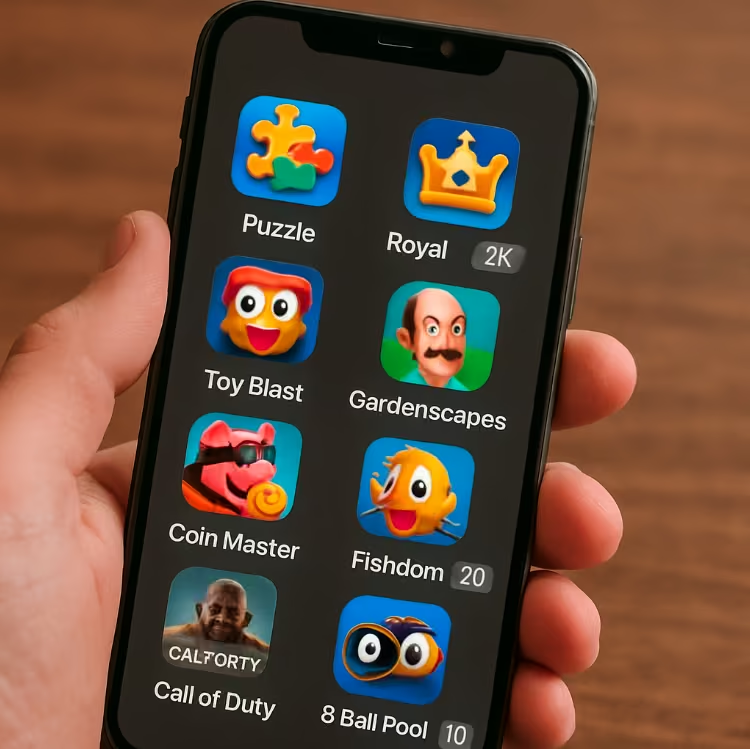
If you are ready to test this ad-revenue sharing model yourself, you will quickly spot two massive names in the app store: Mistplay and Swagbucks. Think of these platforms as digital reward loyalty programs, similar to a digital punch card at your local coffee shop. The more time you spend in their ecosystem, the more “stamps” you collect. Deciding between mistplay vs swagbucks for rewards ultimately comes down to your personal habits. Do you want an app strictly dedicated to mobile games, or do you want a grab-bag of activities to earn your spare change?
Making sense of your earnings on these platforms requires understanding a basic trick they both use: unit-to-dollar conversion. Neither app drops actual quarters into your account while you play. Instead, they award their own virtual currency “units” for Mistplay and “SBs” for Swagbucks which you later trade in for real money. For instance, 1,500 Mistplay units might equal five dollars, while it takes about 500 SBs to get that same value. It forces you to do a little math before claiming your paypal rewards for online gaming, ensuring you know exactly how many hours of play equal a real dollar.
To figure out which platform respects your time more, you have to look past the virtual currency and evaluate their actual features:
Ultimately, choosing between them is simple: go with Mistplay if you just want to relax with games and let rewards build up in the background over a few weeks. Go with Swagbucks if you want a faster route to your first $5 payout by mixing gameplay with daily micro-tasks. Once you get comfortable turning your casual screen time into small digital gift cards, you might wonder if your actual gaming abilities are worth more than pennies.
Earning pennies for playing casual puzzles is fine for killing time, but some players want their actual gaming abilities to pay off. Enter the world of skill-based competitive gaming platforms, where you aren’t just earning ad revenue you are competing against other humans for a cash prize. Unlike the reward apps we just covered, these tournaments operate on a “pay-to-play” model. To join a match, you pay a small entry fee, usually around sixty cents. The app pools your fee with your opponent’s, keeps a tiny cut for itself, and awards the rest as a prize pool to the winner.
If putting your own cash on the line sounds intimidating, the good news is you never have to start blindly. One of the best beginner tips for maximizing gaming income is to spend your first few weeks strictly in the “free” practice tiers. These apps use a system called skill-based matchmaking to keep things fair. This means the software tracks your win rate and pairs you with players who are exactly as good as you are. By playing free rounds, you help the system accurately gauge your ability, ensuring that when you finally do wager a dollar, you aren’t instantly crushed by a seasoned pro.
Because you are funding these prize pools out of your own pocket, the law treats these apps differently than standard reward games. Verifying legitimacy of cash prize tournaments means understanding the fine line between gambling (which relies on luck) and skill. In the US, games of pure skill are legal in most places, but some local governments still block them. Before making a deposit, use this quick checklist to see if you can legally play for cash:
Success on these platforms requires realistic expectations. They offer a fun way to raise the stakes on your favorite solitaire or bingo games, but they are not a guaranteed paycheck since you can easily lose your entry fees. Whether you build up a balance through intense competition or just scrape together a few bucks from casual reward apps, your final hurdle is getting that money into your real-world wallet.
Nothing is more frustrating than playing for weeks only to discover you need $50 to cash out. True games that pay real money instantly are rare because most companies require a “payout minimum.” You cannot process your earnings until you collect a set amount, like $1 or $5. Once you hit that small milestone, your PayPal account makes retrieving the cash incredibly simple.
Before you can transfer those funds, you will likely face a brief security check. Apps use basic identity verification often asking for a quick selfie or phone number to prove you are a real human rather than a robot draining their system. Even using the fastest paying cash out methods, your first withdrawal might sit in a “Pending” status for 24 to 48 hours while they review it.
To avoid platforms that hold your money hostage, look for apps famous for low requirements. These trusted mobile games with instant payouts allow you to withdraw your earnings almost as soon as you make them:
Sticking to well-known apps with realistic payout rules protects your free time. Unfortunately, app stores are still flooded with shady developers promising hundreds of dollars for just a few screen taps. Because those offers are always too good to be true, you need to know how to spot a mobile gaming scam before you waste 20 hours.
Have you ever downloaded a game promising a $500 payout, only to find the app flooded with five-star reviews from users with names like “User8934”? That is a classic sign of “review botting.” Shady developers pay for automated computer programs to flood the app store with fake positive feedback, burying warnings from real players. When verifying legitimacy of cash prize tournaments or reward apps, always filter reviews to read the one-star ratings first to find the real story.
Beyond fake praise, predatory apps often use sneaky tactics to hide their true intentions before you even hit play. A simple puzzle game should never need access to your phone’s microphone or contact list; asking for those is a major warning sign for hidden malware. Furthermore, be highly cautious of games labeled “Early Access.” Developers use this tag to prevent users from leaving public reviews, making avoiding illegitimate gaming reward apps incredibly difficult since no one can warn you about their shady practices.
Protecting your smartphone and your free time starts with reading the fine print carefully. Watch out for these five obvious red-flag phrases commonly found in scam app descriptions:
Even if an app seems normal at first, the real trap usually springs right when you try to get paid. Scam games are notorious for “withdrawal gating,” a trick where the app intentionally stops giving you reward points right before you reach the cash-out amount. You might zoom up to $19.95 easily, but the game suddenly stops paying out, ensuring you never hit the $20 minimum. Asking “are play-to-earn apps worth your time?” is completely valid when dealing with these tricks, but dodging them ensures your screen time remains profitable.
Earning pennies can feel frustratingly slow when you first start playing, but there are simple beginner tips for maximizing gaming income. First, try a system called a “referral loop.” You and a friend exchange invite codes when signing up for new apps, giving both of you an instant cash bonus before playing a single level.
Once you have your initial bonus, look for features that reward your loyalty, like “multipliers” and “daily streaks.” These tools double or triple your points simply for opening the app several days in a row. Claiming these quick bonuses grows your balance steadily without requiring you to spend extra hours glued to your screen.
Eventually, you will hit daily limits for earning game credits on a single platform. To bypass this roadblock, use a tactic called “app stacking” by juggling two or three different reward platforms on your phone. When one app caps your points for the afternoon, smoothly switch to your backup app so your earning momentum never stops.
Try this daily 15-minute ‘Gaming Routine’ for maximum efficiency:
These represent steady ways to earn gift cards playing puzzles, keeping you safe from the unnecessary risks associated with newer trends like crypto gaming.
You’ve likely seen bold claims online promising that crypto-gaming will replace your day job. If you are building a personal guide to making money playing video games, you must understand how these “Play-to-Earn” (P2E) apps differ from casual reward games. Instead of paying in standard points that convert to flat dollars, P2E games pay you in digital tokens. Think of it like an arcade handing out specialized brass coins; you can use them inside the building, but taking them outside to buy groceries requires a complicated exchange process.
The barrier to entry here often involves buying a digital item first, introducing sudden financial risk. Unlike traditional skill-based competitive gaming platforms where you might just pay a small tournament entry fee, many crypto games require you to purchase a specialized character or tool an NFT (Non-Fungible Token)—just to start. You are essentially buying a digital certificate of ownership for a virtual item. While creators claim you can sell these later for a profit, you still have to spend real money upfront hoping the game remains popular enough for someone else to buy your items.
Storing and trading these virtual rewards requires setting up a digital wallet, which acts as a specialized software vault completely separate from your bank. This extra step brings up a vital question: are play-to-earn apps worth your time if the currency constantly changes value? Because these tokens are tied to the unpredictable crypto market, the twenty dollars you earned on Tuesday might plummet to two dollars by Friday. You aren’t just playing a game; you are participating in a volatile mini-stock market where your hard-earned wages can vanish instantly.
For most casual players, the steep learning curve and financial risks of crypto gaming simply outweigh the potential rewards. Sticking to standard apps offers a safer, more predictable way to earn extra spending money without risking your own cash upfront. Once you have built up those safe, steady points in your favorite puzzle or trivia games, the final step is turning them into real, usable funds.
After hours of tapping away on your screen, you finally hit the magic number to cash out. But when you open the rewards menu, you will likely notice a strange pricing gap between different options. App developers often set different exchange rates depending on the reward you choose. For instance, when exploring ways to earn gift cards playing puzzles, a $10 Amazon card might cost 10,000 points, while $10 in cash costs 12,000 points. Why does this difference exist? Companies buy digital gift cards in massive bulk at a discount, so those cards cost the developer less to give away than pure cash.
So, is straight cash always the superior choice? Not necessarily, especially if you plan on making this a regular daily habit. Earning paypal rewards for online gaming is incredibly convenient, giving you flexible money you can spend anywhere to pay a bill or buy a coffee. However, the IRS requires payment platforms like PayPal to report your income if you receive over $600 in a calendar year through commercial transactions. If you cross this limit, PayPal will send you a tax form called a 1099-K, which means you must legally claim those small gaming rewards on your annual taxes.
Beyond tax rules, you also need to consider how fast you want the money in your hands. When comparing payout thresholds for reward apps, gift cards usually require a lower point balance to trigger a payout and often arrive in your email inbox within minutes. Here is a quick breakdown of the pros and cons to help you weigh your options:
| Feature | PayPal Cash | Amazon Gift Card | | :—- | :—- | :—- | | Speed | Slower (1 to 3 business days) | Fast (Instant to 24 hours) | | Point Value | Costs more points per dollar | Costs fewer points (discounted) | | Tax Rules | Tracked and reported if over $600/year | Generally not tracked by the IRS |
Ultimately, your choice comes down to how you actually spend your funds in real life. If you do most of your household shopping online anyway, trading fewer points for a fast gift card is the smartest move. If you specifically need cash to cover a physical expense, waiting for the PayPal transfer is worth the extra gaming time. Now that the mechanics of getting paid are clear, it is time to put these strategies to work with a structured approach.
Before reading this, those flashy ads promising thousands of dollars just for tapping your screen probably felt like an obvious trap. Now, you can look at the mobile gaming world differently. You understand how developers share their ad revenue and how to confidently identify legitimate apps to earn extra cash without compromising your privacy. You have moved past the hype and are ready to navigate the reality of rewarded play.
The secret to success here isn’t treating your phone like a second job; it is building a sustainable, 20-minute daily gaming habit. If you are already playing puzzles while waiting for your morning coffee or winding down on the couch, just swap your usual apps for rewarding ones. Above all, resist the urge to buy in-game “boosts” or extra lives. Spending real money to make digital money defeats the purpose entirely—keep your wallet closed and let the points accumulate naturally.
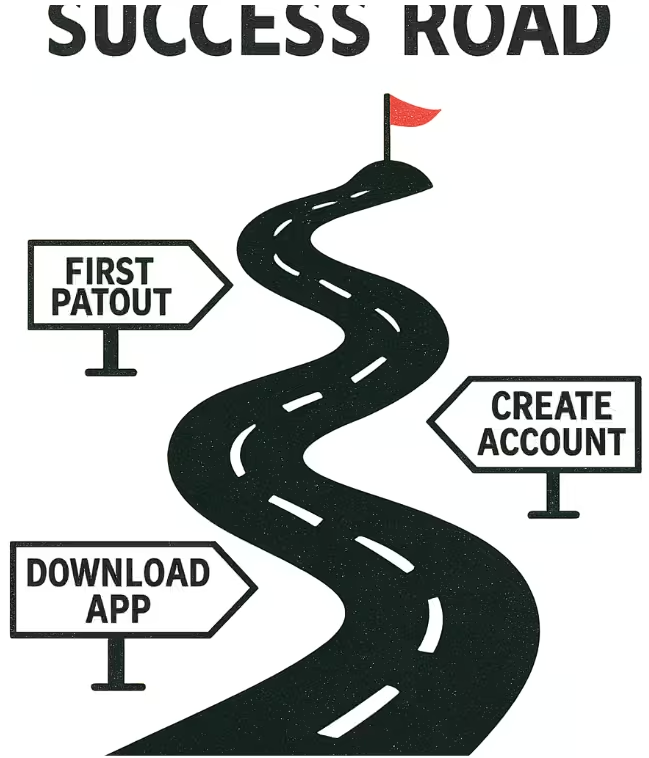
To prove this system works and get that first payout in your hands, you need a straightforward action plan. Following this practical guide to making money playing video games will keep you focused on reaching your first $25 goal without burning out:
Executing that first cash-out is a crucial confidence booster. Once you have successfully transferred those initial earnings to your PayPal or email inbox, you will know exactly what to expect from the platform moving forward. If you find your point-earning speed slowing down after that first win, remember your beginner tips for maximizing gaming income: switch to a new game within the app, try a different genre, or simply take a break for the day.
Ultimately, turning your screen time into a few extra dollars is a low-stress way to treat yourself. You are not replacing your salary, but you are absolutely taking back a little value from the advertising industry. So go ahead, start with a simple puzzle game, enjoy the process, and let your downtime pay for your next cup of coffee.