Ultimate Teen Patti Hacks: Master the Game Like a Pro
Teen Patti, often referred to as Indian Poker, is a thrilling card game that has captured the hearts of millions across the globe. Whether played soci...
read more


Teen Patti is one of India’s most loved card games. Whether you’re gathering with family during Diwali or just want to enjoy a fun evening with friends, this guide will teach you everything you need to know to start playing confidently today.
Teen Patti means “three cards” in Hindi. It’s an exciting gambling game similar to poker but with its own unique rules. The game is fast-paced, easy to learn, and popular across India, Pakistan, and other South Asian countries.
The best part? You only need a deck of cards and a few friends to get started!
Essential Items:
Setup: Players sit in a circle so everyone can see each other. This matters because you’ll be watching how others bet!
Before any cards are dealt, every player must put in an equal amount called the “boot” or ante. This money goes into the pot (the center of the table).
Example: If 4 players agree on ₹20 boot, everyone puts ₹20 in. The starting pot is ₹80.
The boot amount should be affordable for everyone. Start small if you’re new to the game!
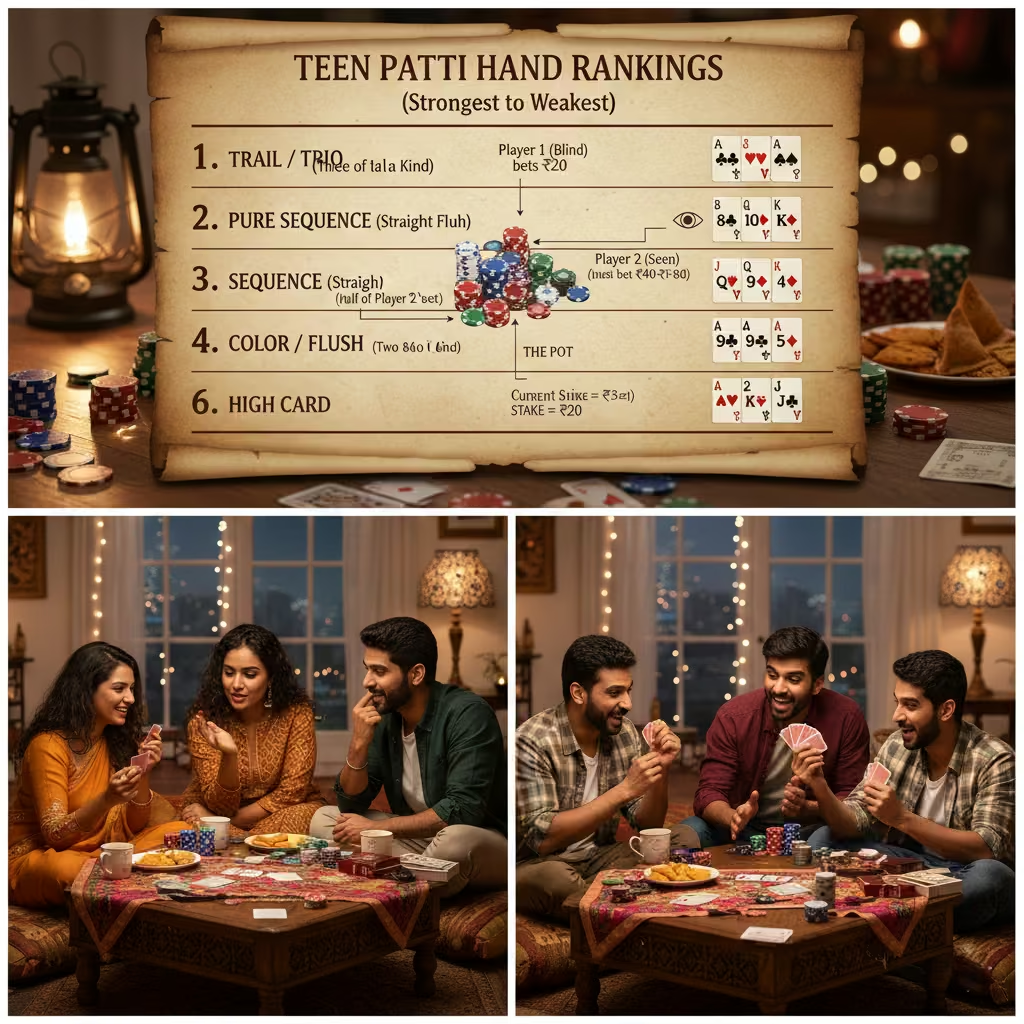
Knowing hand rankings is crucial. Here are the 6 hand types from best to worst:
Three cards of the same rank.
Three consecutive cards of the same suit.
Three consecutive cards, NOT all same suit.
Three cards of the same suit, not in sequence.
Two cards of same rank, plus one odd card.
Three unmatched cards.
Important Rule: A higher category ALWAYS beats a lower one. Even 2-2-2 (worst trail) beats A♥ 2♥ 3♥ (best pure sequence).
Pick someone to shuffle and deal cards. You can draw cards—highest card deals. The dealer position rotates clockwise each round.
Each player puts the agreed boot amount into the pot before cards are dealt.
The dealer gives each player three cards, one at a time, face down. Keep your cards hidden!
This is where Teen Patti gets interesting. You have two choices:
Play Blind (Without Looking):
Play Seen (After Looking):
Starting from the dealer’s left, players take turns betting clockwise. Each player must:
Understanding Current Stake: The “current stake” is the base amount you must bet. It starts at the boot amount.
Blind Player Betting:
Seen Player Betting:
Example:
Sideshow (Compromise): When all remaining players are seen, you can ask the previous player to compare cards privately.
Show (Showdown): This ends the game. Rules:
You win the pot in two ways:
1. Start Tight: Only play strong hands at first—pairs or better. Fold weak high cards.
2. Position Matters: Acting last (near the dealer) is an advantage. You see what others do before deciding.
3. Watch Your Opponents:
4. Blind Play Wisely:
5. Bankroll Management:
6. Know When to Fold:
1. Playing Every Hand: Fold weak hands! You don’t have to play every round.
2. Not Tracking Current Stake: Always know the betting amounts before you act.
3. Calling Show Too Early: Be patient. Let others eliminate each other first.
4. Ignoring Opponents: Watch how people bet—it tells you a lot about their hands.
5. Emotional Betting: Never play angry or desperate. Take a break if you need to.
Once you master the basics, try these fun variations:
Muflis (Lowball): The LOWEST hand wins instead of highest!
AK47: Aces, Kings, 4s, and 7s are wild cards (can be anything).
999: Face cards \= 0, Ace \= 1. Hand closest to 999 wins. Example: 9-9-9 \= 999 (perfect!)
Best of Four: Each player gets 4 cards but only uses the best 3.
Q: How many players can play Teen Patti?
A: 3 to 6 players. Four or five players is
ideal.
Q: Can I switch from blind to seen?
A: Yes! You can look at your cards anytime during
your turn. But once you’re seen, you can’t go back to blind.
Q: What if two players have the same hand?
A: In a show, the player who did NOT pay
for the show wins.
Q: Is A-2-3 a valid sequence?
A: Yes! It’s actually the HIGHEST sequence, beating even
A-K-Q.
Q: Can a blind player ask for a show?
A: Yes, when only 2 players remain. It costs the
current stake.
Q: When should I fold?
A: Fold if you have weak high card (Jack or lower), multiple
players are raising, or you’re uncomfortable with the stakes.
Q: How is Teen Patti different from poker?
A: Main differences: only 3 cards, no
community cards, blind play option, maximum 2-player showdown, different hand rankings.
Q: What’s the best starting strategy?
A: Play tight (only strong hands), watch
opponents carefully, manage your bankroll, and practice with small stakes first.
Teen Patti is simple to learn but takes practice to master. Start with small stakes, focus on learning hand rankings, and watch how experienced players bet. Most importantly, have fun!
Remember: Teen Patti is about skill, psychology, and reading your opponents—not just luck. The more you play, the better you’ll get at knowing when to bet, fold, or bluff your way to victory.
Pro Tip: Print a hand ranking chart and keep it nearby during your first few games. Soon, you’ll have them memorized!
Now grab a deck of cards, gather some friends, and enjoy one of India’s most exciting card games. Good luck at the tables!

No schedules, no limits—Teen Patti Master is your always-on poker table. Dive in whenever you need an adrenaline rush.
From the traditional 3-card rules to mind-blowing modes like Muflis, Hukam, and Joker—Teen Patti Master keeps it fresh and fun.
Climb leaderboards, collect bonuses, and prove your skills. Winning isn’t just lucky—it’s legendary.
Enjoy a seamless, safe experience with encrypted gameplay, secure payments, and a strong anti-cheat backbone.
Teen Patti, often referred to as Indian Poker, is a thrilling card game that has captured the hearts of millions across the globe. Whether played soci...
read moreTeen Patti, a classic card game originating from India, has captured the hearts of millions worldwide. Known for its thrilling gameplay and social asp...
read moreTeen Patti Gold has taken the digital gaming world by storm, offering players an exhilarating blend of strategy, chance, and social engagement. With i...
read moreTeen Patti, often termed as Indian Poker, is a popular card game that has taken the online gaming world by storm. Not only does it offer thrilling gam...
read moreTeen Patti, also known as Indian Poker, is a popular card game that has captured the hearts of millions worldwide. Originating from the Indian subcont...
read moreTeen Patti Gold is a popular card game that has taken the online gaming world by storm. Loved by millions, it seamlessly combines the classic game of ...
read more